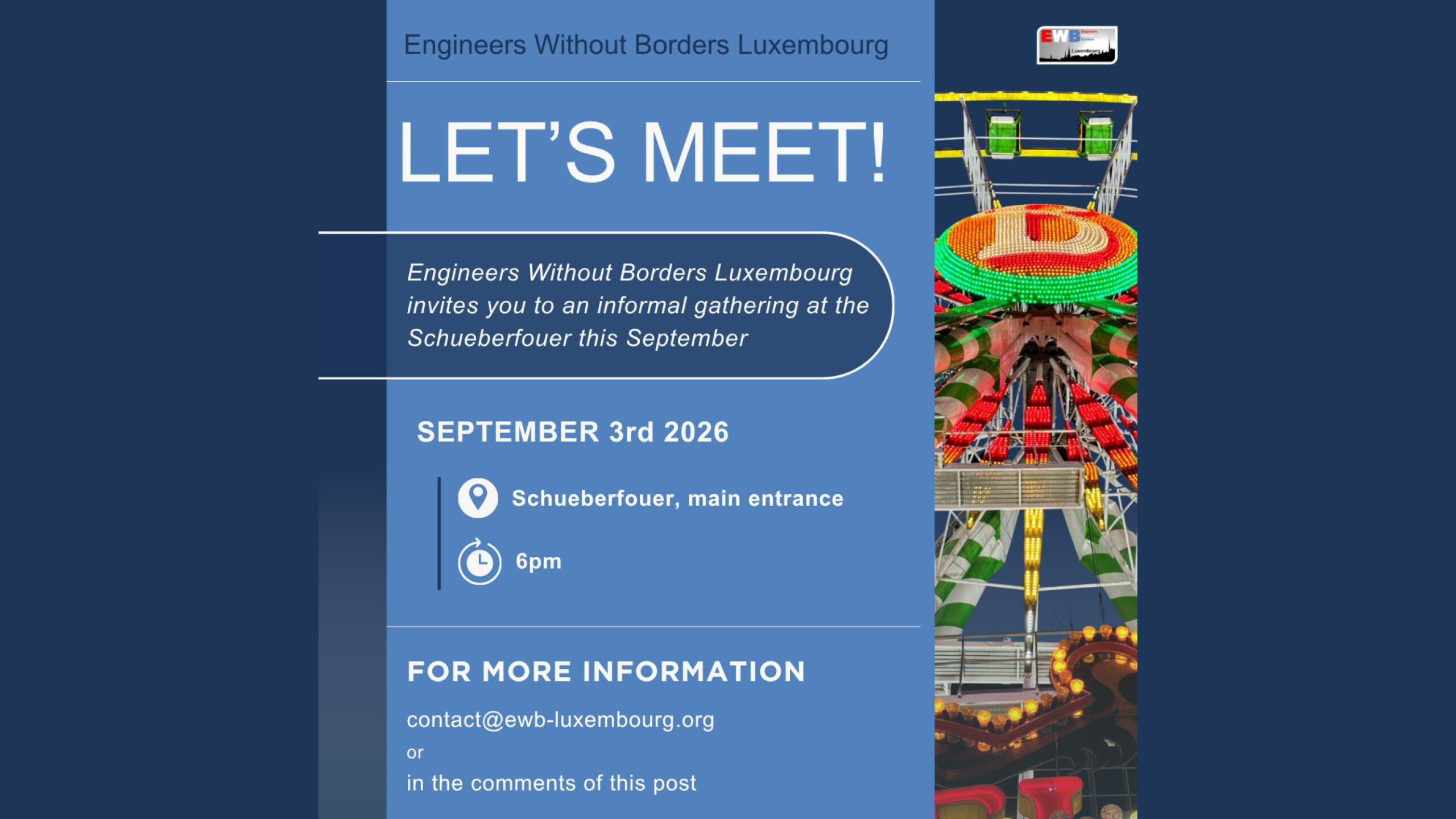
Let’s take a break from meetings and project work and meet up at the Schueberfouer! 🍻
We’re looking forward to seeing old faces, new faces, and everyone in between! Let’s catch up, exchange ideas, and maybe talk about some old, new, and future projects along the way.
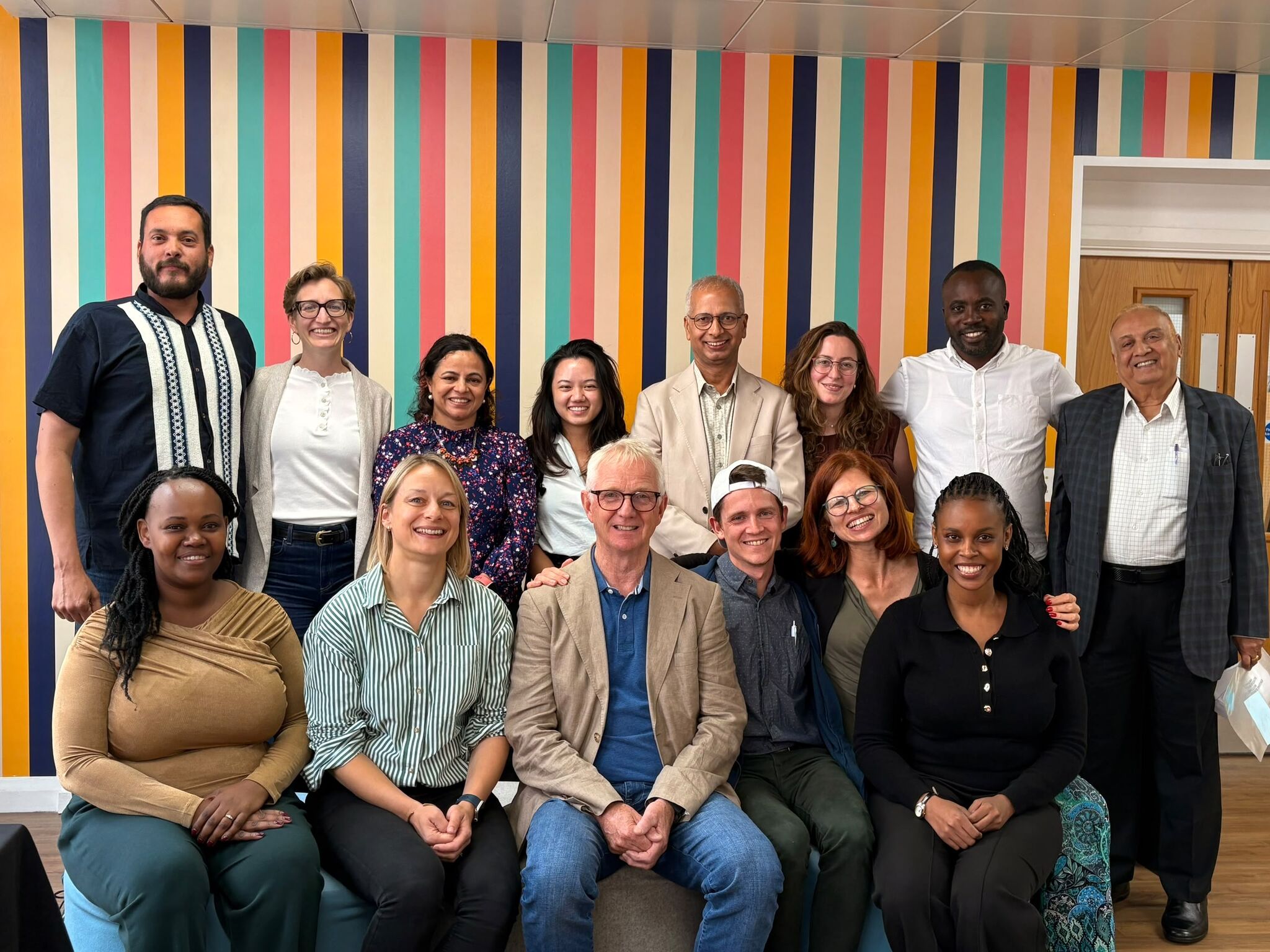
Over three inspiring days, EWB-I board members and the delivery team worked together to shape the network’s vision toward 2030—strengthening the strategy, governance, and collaboration to amplify global impact through engineering for sustainable, community-centred development.
The visit also included inspiring examples of impact in action, from CIVIC SQUARE’s neighbourhood-led transformation work to the EWB-UK Engineering for People Design Challenge Grand Finals, where students showcased innovative solutions to real-world challenges.
A sincere thank you to the EWB-I delivery team—especially Katie Cresswell-Maynard—for the excellent facilitation, to our fellow EWB-I Board members for their valuable contributions, and to EWB-UK for being such generous hosts and for inspiring the next generation of engineers.
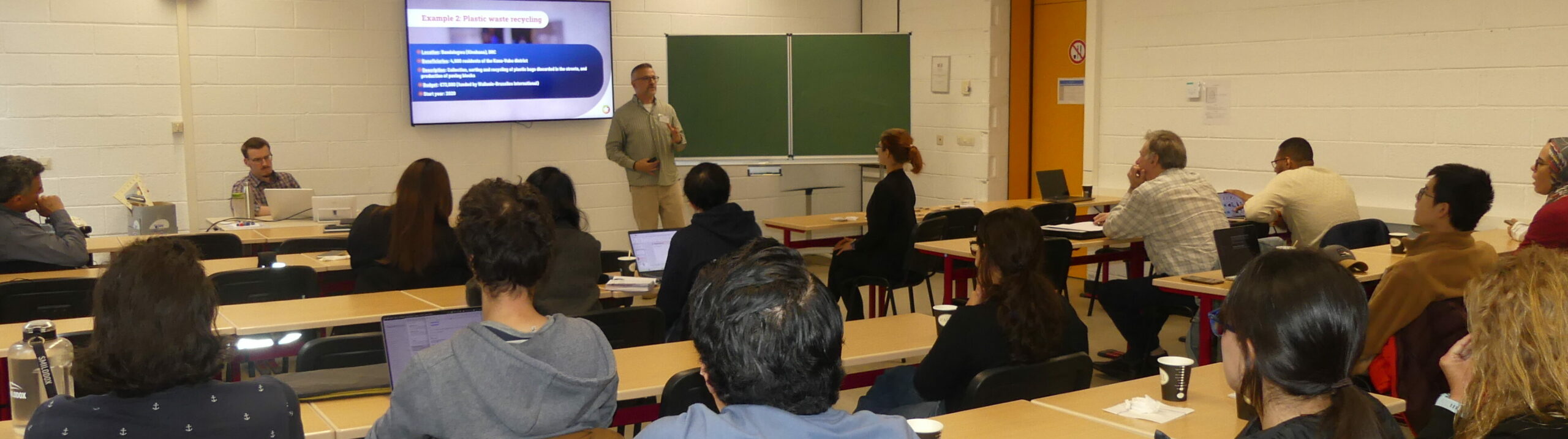
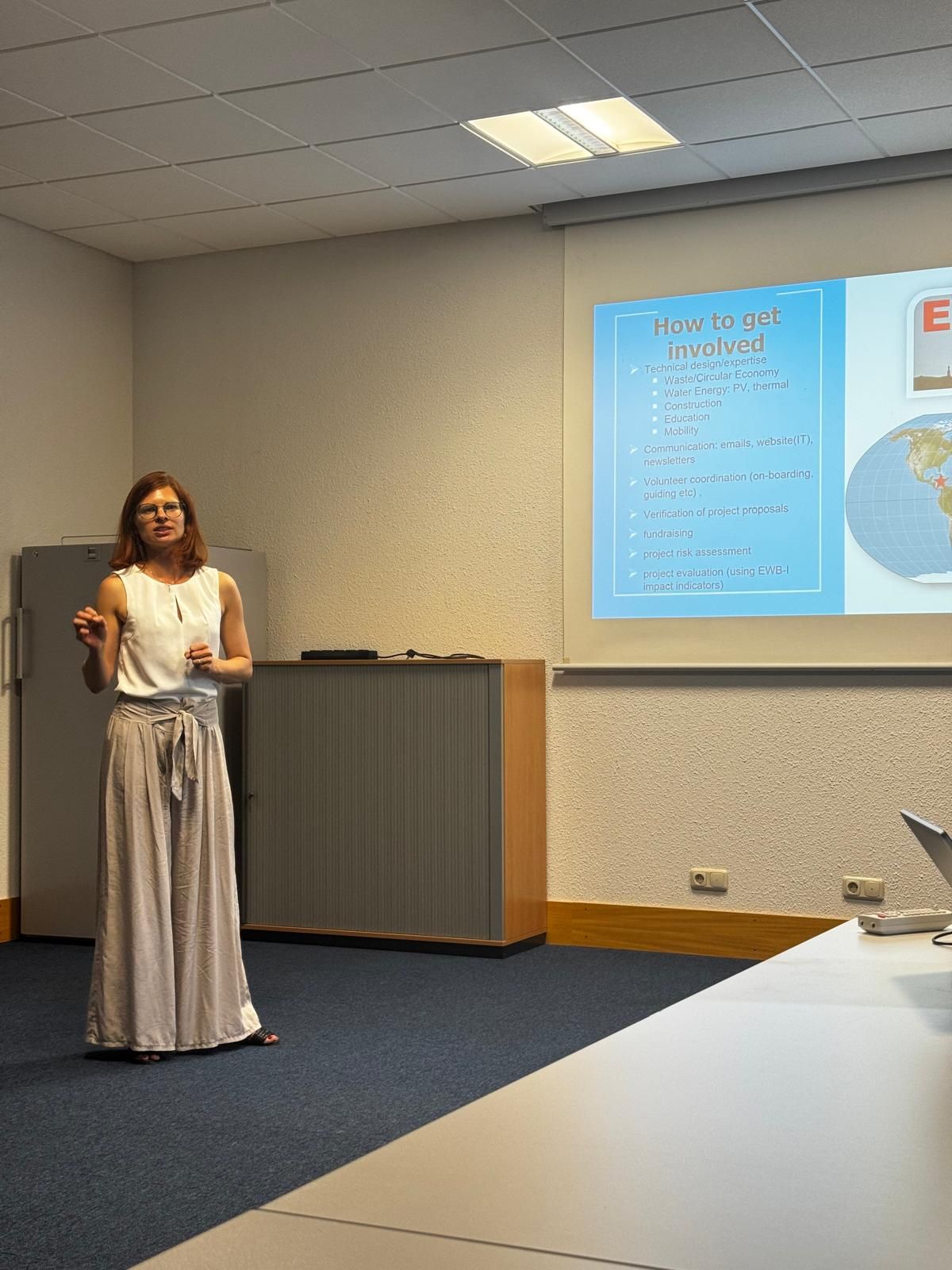
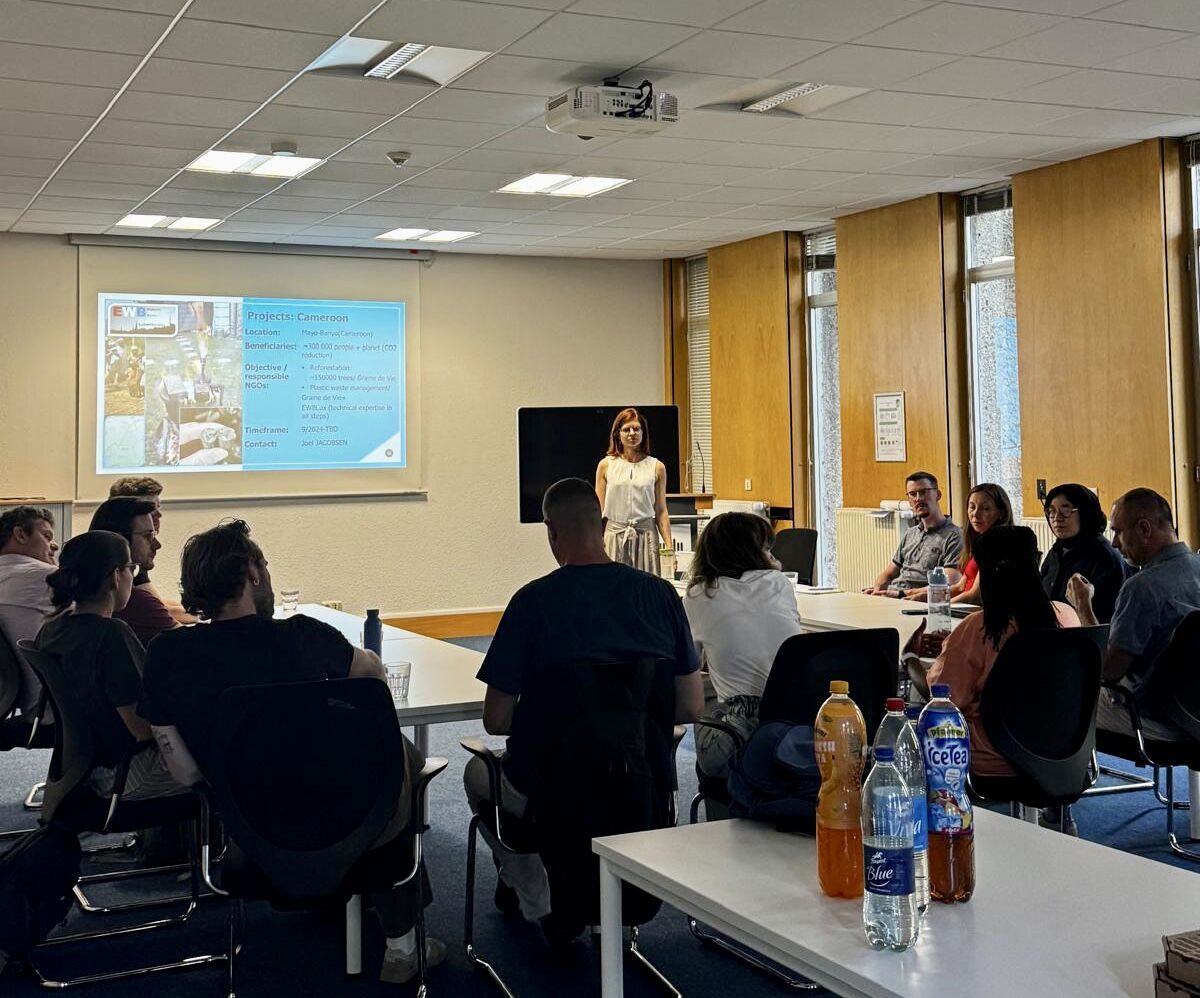
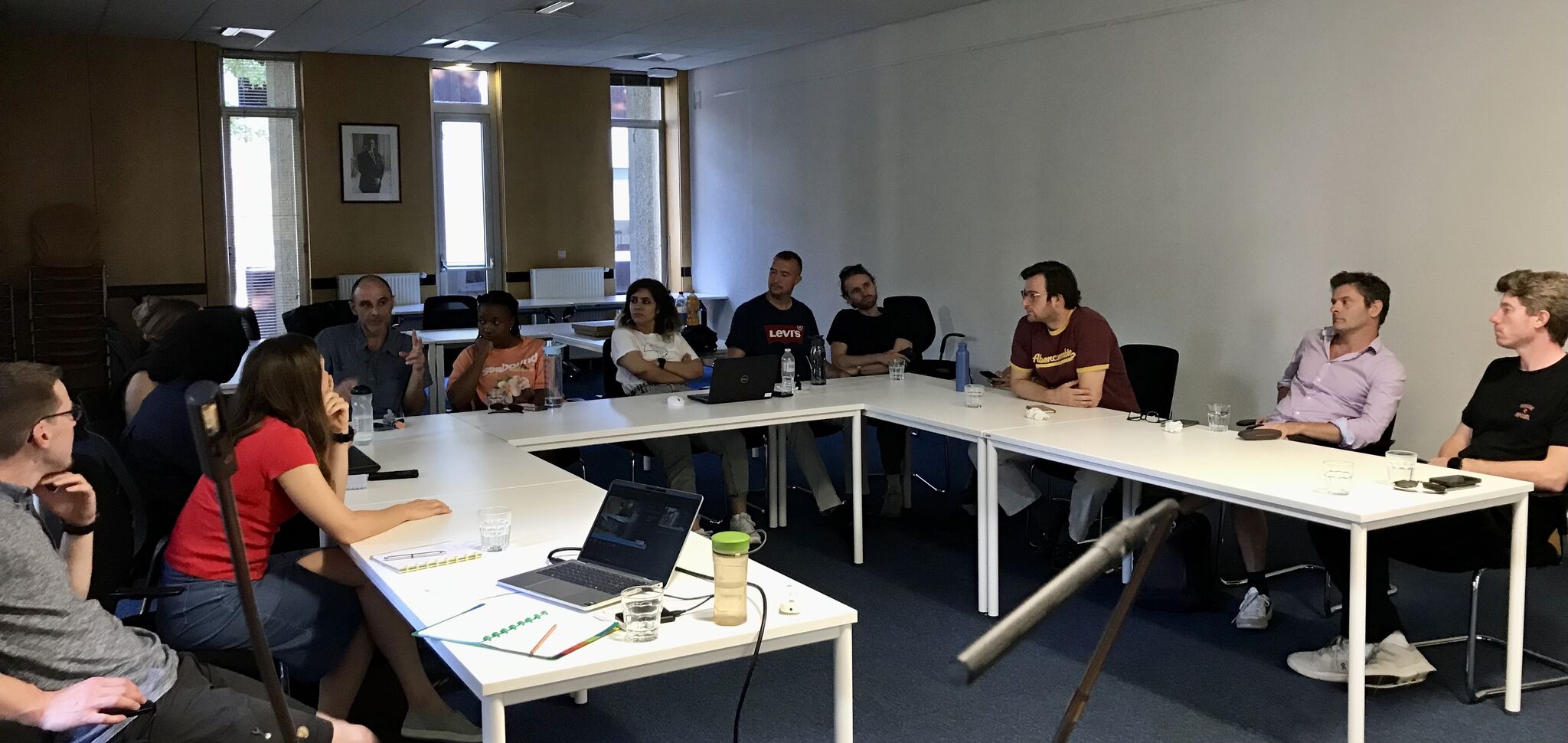
We recently gathered at Campus Kirchberg — old faces, new joiners, and a lot of pizza to reflect on the past six months, share updates on our projects, and discuss the next steps ahead.
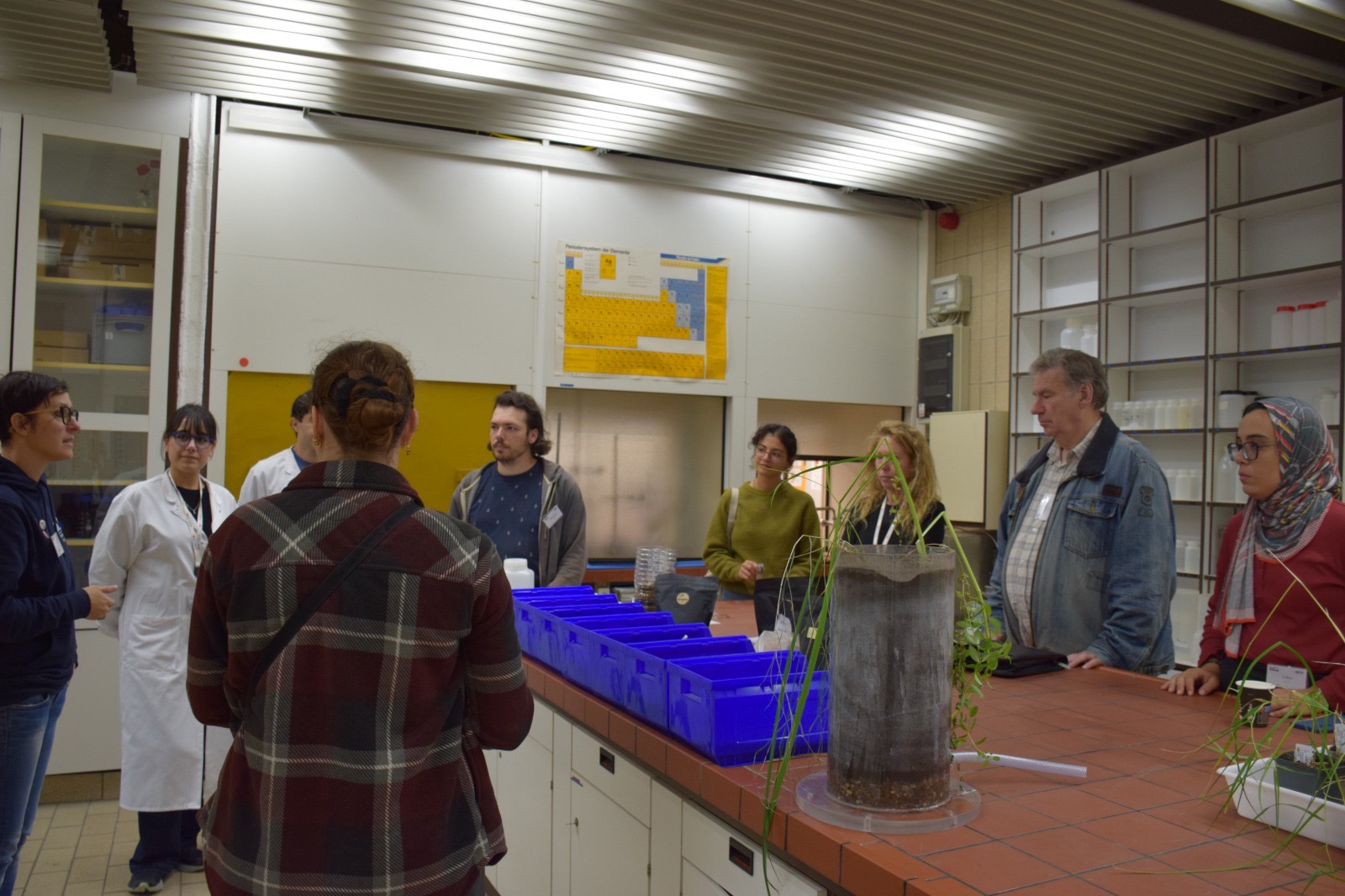
🔧 We explored progress across initiatives including: • Solar PV systems in Uganda • Circular economy and plastic waste management in Cameroon • Biochar production research • Sustainable construction with earth-based materials in Morocco
A big thank you to everyone who joined, shared ideas, and contributed to our growing community of engineers, students, researchers, and sustainability enthusiasts.
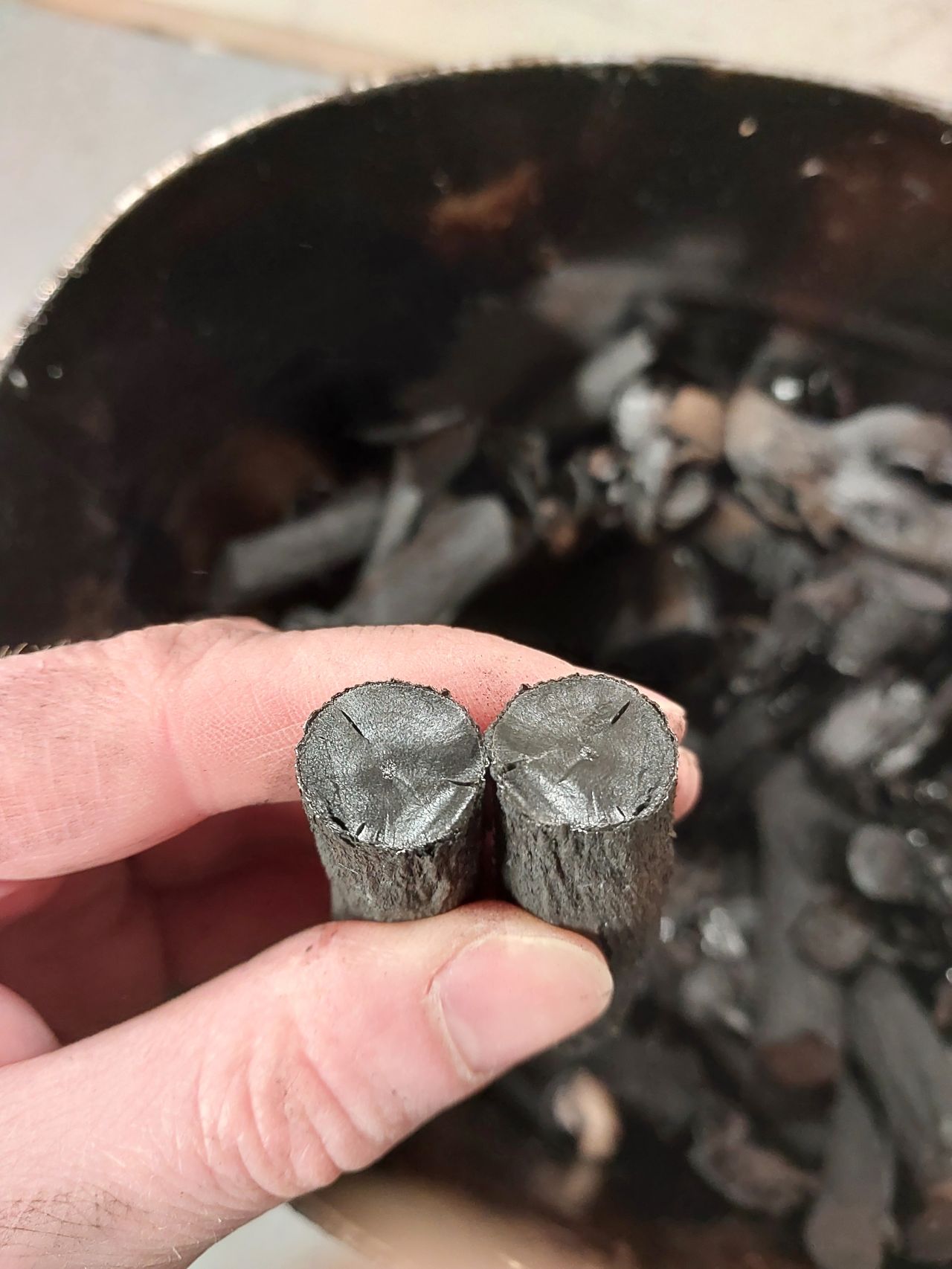
Earlier this year, we carried out a small-scale wood carbonization experiment to better understand the process of transforming biomass into carbon-rich material.
Using a mixture of cherry laurel, pine construction wood, hardwood offcuts and walnut shells, we loaded a kiln and monitored the carbonization process over several hours. As temperatures increased, moisture was driven off, followed by the production of wood gas, which was then recycled to help sustain the process.
▪️ The result? ➡️ Approximately 3 kg of carbonized material produced from 6.5 kg of fresh wood feedstock.
Some key takeaways from the experiment 👇 🌳 Hardwood performed significantly better than softwood, producing a higher yield of solid carbon. 📏 Similar-sized wood pieces helped achieve more consistent results. 🌡️ Uniform temperatures throughout the kiln are critical. Material near the top was not fully carbonized, highlighting the importance of heat distribution. ⏳ Carbonization is a slow process that requires patience and careful monitoring. ⚠️ Safety matters. Carbonized wood can release gases such as carbon monoxide, and fine carbon particles should be handled with care.
Experiments like these help bridge theory and practice, providing valuable insights into biochar production, biomass valorisation, carbon storage, and circular approaches to resource use.
Every prototype teaches us something new. This one reminded us that sustainability is often built through experimentation, iteration, and a willingness to learn from both successes and imperfections.
On 30 May, we had the pleasure of participating in the Festival des Territoires Résilients, organised by Iwwerliewen in Differdange.
The festival brought together citizens, associations, researchers, artists and community initiatives around a shared question: ➡️ How can we build more resilient, sustainable and connected communities for the future?
The event aimed to create connections, showcase local initiatives and spark new collaborations across Luxembourg and beyond.
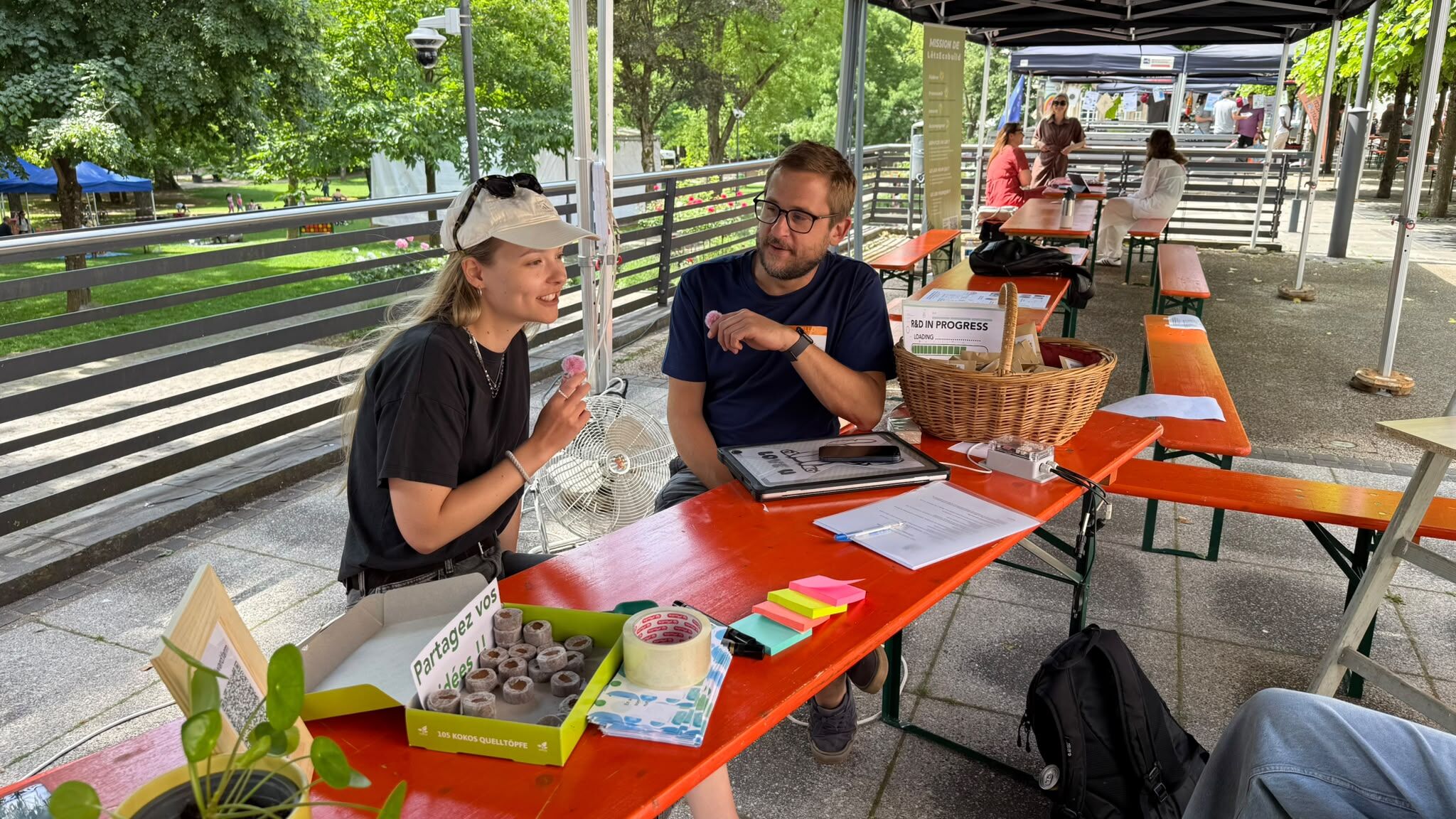
Engineers without borders Luxembourg set up a stand to present our mission and vision. Through interactive and playful activities such as a quiz on women in engineering and a lemon battery experiment we engaged visitors and sparked conversations with the crowd.
🚲 One of the highlights of the day was presenting our Smoothie Bike project 👇 Through a simple but engaging activity, participants could power a blender with their own energy to make a fresh smoothie, creating a fun and tangible way to start conversations about sustainability, energy, health, and active lifestyles. The project sparked curiosity among visitors of all ages and opened the door to many meaningful discussions about how small actions can contribute to a more sustainable future.
For us, it was a valuable opportunity to meet members of the public, share our organisation’s work and projects, exchange ideas with other inspiring organisations, and strengthen our network of people working towards positive social and environmental change.
The other highlight was seeing former member Max Schmit and Andrea Varas present the latest developments of their project, Edward Farm. It’s always inspiring to see community members turn ideas into action and create new initiatives that contribute to a more resilient future.
A big thank you to the team at Iwwerliewen for organising such a meaningful event and creating a space where citizens and organisations can come together, learn from one another, and explore new possibilities for collaboration.
Over the past weeks, Engineers without borders Luxembourg has started bringing the SmoothieBike initiative to life together with the children at Day Care Arcus as part of the national BNE – “Bildung fir Nohalteg Entwécklung” programme.
What began as a broken bicycle is gradually transforming into something much bigger: ✨ a hands-on lesson in sustainability, ✨ a creative engineering experience, ✨ and a fun way to explore circular economy in everyday life.
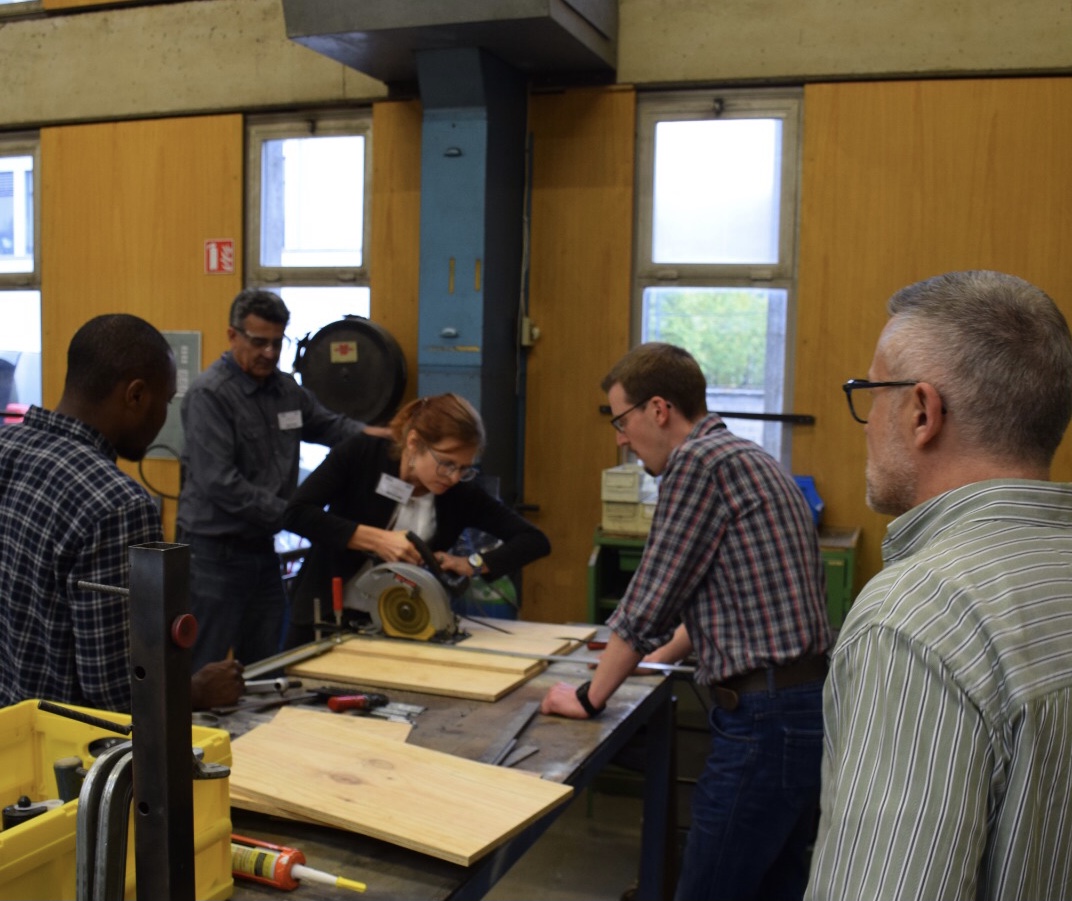
Through the workshops, children are discovering how technical thinking, teamwork, and creativity can give new life to unused materials. Step by step, they are learning that sustainability is not just a concept in a classroom, but something tangible they can build with their own hands.
And soon… the real reward: Pedal-powered smoothies made by the children themselves! 🍓⚡
Beyond the smoothies, the project encourages discussions around: 🌍 Reducing waste 🔄 Reusing materials 💡 Energy and innovation 💚 Healthy and active lifestyles
Seeing the children’s curiosity and enthusiasm reminds us why projects like this matter: small engineering ideas can plant the seeds for lifelong environmental awareness.
A huge thank you to everyone involved in making this initiative possible. More updates coming soon!
Engineers without borders Luxembourg is now expanding to Instagram, and we’re bringing you closer than ever to the projects, people, and ideas shaping a more sustainable and equitable world.
From hands-on engineering solutions to inspiring stories from the field, this space will spotlight how innovation meets impact. 🚀
Follow us to: 🔧 Discover real-world projects 🌱 Learn how engineering drives sustainable change 🤝 Meet the passionate community behind it all 📍 Stay updated on our events and initiatives
Join us on this journey and be part of building a better future, together.
A big thank you to the Young Women Conference (YWC) for inviting us to take part in this inspiring trade fair. It was a great opportunity to connect with young women and raise awareness around environmental and societal challenges and most importantly, to show that impact doesn’t require many resources, just curiosity and initiative.
💡 From experimenting with a water filter prototype to generating electricity using a lime, these hands-on activities sparked conversations, creativity, and engagement.
Seeing their enthusiasm, questions, and ideas reminded us why this work matters.
Engineers without borders Luxembourg are taking part in the national BNE – “Bildung fir Nohalteg Entwécklung” programme, promoting climate awareness, circular economy, and sustainable development.
As part of this initiative, the SmoothieBike project will soon come to life through hands-on workshops with children aged 8–12 at Day Care Arcus.
More than just a bike, SmoothieBike is a powerful storytelling and learning tool, showing how engineering and material reuse can make sustainability tangible and fun.
The project has two key parts:
🔧 Building the SmoothieBike Together with the children, we will transform a broken bicycle into a pedal-powered blender, introducing them to: • Engineering basics and technical thinking • The value of reuse and circular economy • Creativity, teamwork, and hands-on problem-solving
🍓 Using the SmoothieBike The bike will remain at the Day Care, allowing children to turn fruits into smoothies using their own energy, demonstrating how engineering can: • Reduce food waste • Promote healthy nutrition • Encourage active lifestyles • Make sustainability concrete and engaging
Through this project, we aim to show that simple technical ideas can spark curiosity, empower young minds, and inspire the next generation to think differently about resources and sustainability.
We were recently featured on Radio Latina’s “Universo Associativo” — a moment to share who we are, what we do, and why we believe engineering can be a powerful force for good.
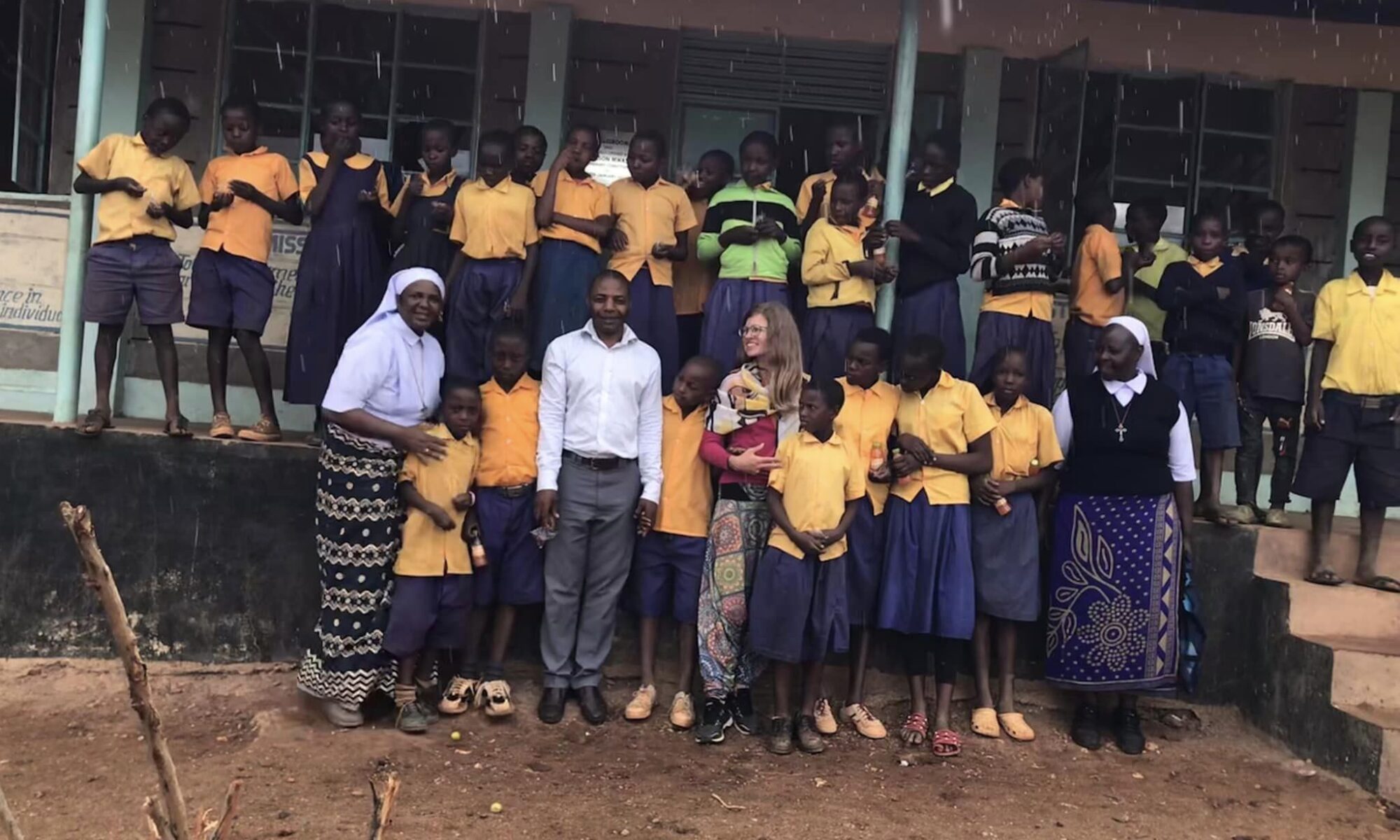
🌍 From Kenya to Morocco, our projects are rooted in one simple principle: working with communities, not just for them. Whether it’s ensuring access to clean water in schools, supporting girls’ education with safe boarding facilities, or tackling waste challenges in Cameroon through circular economy solutions, every initiative is designed for long-term, sustainable impact.
🤝 But we’re more than engineers. Our work brings together communication, project management, fundraising, and community engagement because real change is always a collective effort.